When pocket calculators entered homes in the 1970s, schools largely banned them. A familiar fear took hold: if students could rely on machines, would they stop thinking for themselves? However, later research found that calculators, used alongside teaching, improved paper-and-pencil skills and problem-solving. The lesson was clear. Teach foundations first, then use the tool to extend learning.
This pattern, alarm > adaptation > integration, is familiar. Socrates feared writing would weaken memory. Radio, television, and the internet were all said to erode attention and thought. Each time, the anxiety captured something real, but the worst predictions proved too simple. Education adapted, and the tools were eventually woven into learning. History never repeats itself, but it does rhyme.
The evidence is usually more nuanced than the headlines suggest. The consistent finding is that how a technology is integrated matters most.
Now artificial intelligence is taking its turn. Recent commentary has warned that reliance on AI chatbots may erode critical thinking and memory, and that convenience can slide into intellectual passivity. The key question is whether AI is different enough to demand a different response.
What Makes AI Different
In important ways, it is. Earlier technologies offloaded narrow tasks. Calculators handled arithmetic. Search engines supported recall. Generative AI can draft essays, write code, plan projects, and produce analysis across domains. Earlier tools reproduced knowledge. Generative AI can produce new content, and its adoption has been exceptionally fast.
Yet the underlying mechanism, cognitive offloading, is not new. What changes with AI is the breadth of what can be offloaded.
Rethinking Readiness
These questions are no longer theoretical. At a recent Bangkok panel on AI-driven university pathways, one point was unmistakable: AI is changing what readiness means. If knowledge can be summoned on demand, the premium shifts to what AI cannot easily replicate: judgement, dispositions such as curiosity and fortitude, and the capacity to reason ethically. At Bangkok Patana, our mission to develop global citizens through independence, empathy, creativity, and critical thinking speaks directly to this moment. These qualities are becoming central, not optional. They sit at the heart of future readiness.
Parental Concerns
Some of the loudest assumptions deserve a closer look.
“AI will eliminate whole careers.”
Student survey evidence suggests a more nuanced picture. New technologies usually reshape tasks more often than they erase whole professions. The more pressing question is how young people will learn to work well alongside them.
“Technical skills in AI matter most.”
The evidence suggests otherwise. Students need not only technical fluency, but guidance, ethical framing, and the judgement to use AI well. Real preparation combines digital capability with disciplinary understanding, adaptability, communication, and interpersonal strengths AI cannot easily replicate.
Thailand
For families in Thailand, the question is not whether to avoid professional pathways, but whether universities develop adaptability, industry connection, and human competencies alongside subject expertise. In an AI-rich world, that balance may matter more than ever.
Looking Ahead
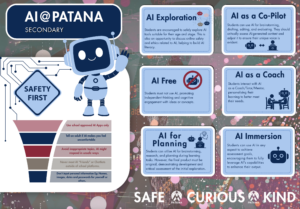
History offers a clear lesson. Outcomes depend on how educators and communities integrate a technology, not on the technology alone. AI demands the same deliberate approach, only faster and across a wider range of cognitive work.
A future-ready student is a self-directed, adaptable learner who combines critical discernment, ethical judgement, creativity, and emotional intelligence with fluent, responsible use of AI. At Bangkok Patana, that is the kind of global citizen we are proud to nurture.
About the Author