ExpatGuideThailand.com know that you need answers to the questions many expats ask:
Can I help my wife’s business?
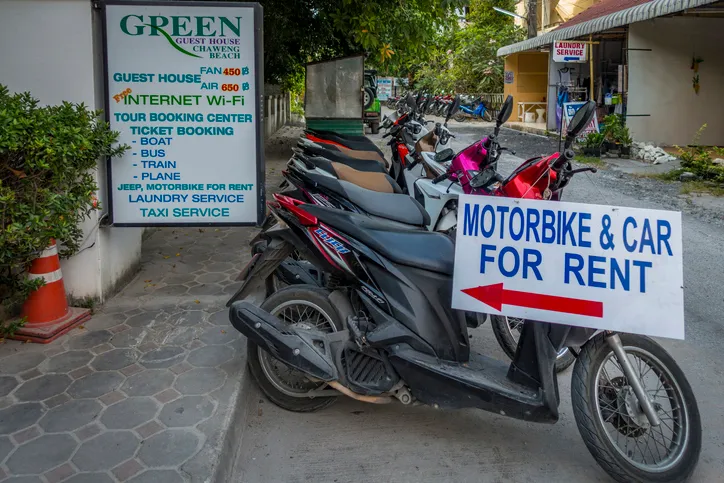
Can I own a motorcycle rental company?
Can I sell products online?
Can I work as a consultant?
Can I be a director of my own company?
Can I do bookkeeping?
Can I manage staff?
Can I work remotely for a foreign company?
Can I volunteer?
Can I be a YouTuber?
Can I repair computers?
Can I be a real estate agent?
Can I run an Airbnb?
Can I teach English?
Can I drive customers to the airport?
Most existing articles on the Internet fail to give you a useful reply because they either:
1. Simplify too much.
2. Repeat the legal list.
3. Ignore the grey areas where foreigners actually get into trouble.
So, let’s try to answer these questions in the following article about work permits and prohibited jobs in Thailand.
A foreigner can have a valid visa, own a company, be married to a Thai citizen and even hold a work permit — and still be working illegally if the actual tasks performed fall into a restricted occupation. This guide explains what work is prohibited, what work is permitted, where the grey areas are, and the mistakes that most often lead to arrests, fines, deportation or cancelled visas.
The basic rule: You may only perform work that you are specifically permitted to perform.
Thailand’s foreign employment system is governed primarily by the Foreigners’ Working Management Emergency Decree B.E. 2560 (2017) and its 2018 amendment and other regulations issued by the Ministry of Labour.
The starting point is simple:
A foreigner may only perform work that is specifically permitted by:
* their immigration status
* their work permit
* their employer
* their approved job description
In addition, some occupations are reserved exclusively for Thai nationals.
A work permit does not automatically override these restrictions.
The 27 occupations foreigners cannot do
The Ministry of Labour currently lists 27 occupations that are prohibited for foreigners.
These include:
Transport and driving
- Driving motor vehicles (except forklifts)
- Taxi driving
- Motorcycle taxi services
- Delivery driving
- Tuk-tuk driving
Tourism
- Tour guiding
Administrative and office work
- Secretarial work
- Certain clerical and typing functions
Legal services
- Legal representation
- Certain legal advisory services reserved for licensed Thai lawyers
Personal services
- Hairdressing
- Beauty treatment
- Traditional Thai massage
Selling and brokerage
- Street vending
- Hawking goods
- Certain forms of brokerage and agency work
Traditional crafts
- Wood carving
- Thai musical instrument making
- Thai doll making
- Handmade silk production
- Umbrella making
- Gold and silver craftsmanship
- Buddha image making
- Lacquerware production
- Gem cutting
- Various other protected Thai handicrafts
The purpose of these restrictions is to preserve traditional Thai occupations and protect employment opportunities for Thai citizens.
What does “work” actually mean?
This is where many foreigners get caught.
Thai law defines work very broadly.
You do not need to:
- receive a salary
- receive commission
- receive benefits
- have a formal employment contract
for your activities to be considered work.
If you perform tasks that create economic value or assist a business operation, authorities may consider that work.
This principle is often misunderstood by retirees and spouses of Thai business owners.
“I’m just helping my wife”
This is probably the most common misunderstanding among expatriates.
Many foreigners assume they can freely help in a business owned by their Thai spouse.
In reality, authorities look at what you actually do.
High-risk activities
If your spouse owns:
- a restaurant
- a guesthouse
- a motorcycle rental business
- a beauty salon
- a travel agency
you may face problems if you are:
- serving customers
- collecting payments
- handling bookings
- renting equipment
- driving customers
- performing restricted occupations
Even if:
- you own shares
- the business belongs to your spouse
- you receive no salary
the activity may still be considered illegal work.
Lower-risk activities
Activities that are often accepted when covered by an appropriate work permit include:
- business strategy
- management oversight
- marketing
- financial planning
- international sales
- foreign customer relations
The distinction is between managerial work and performing the restricted occupation itself.
Can foreigners own businesses?
Yes.
Foreigners can legally own businesses in Thailand through various structures.
However, ownership and employment are different issues.
A foreigner may own:
- a restaurant
- a hotel
- a factory
- a software company
- a consulting firm
while still being prohibited from performing certain operational tasks within that business.
Owning a motorcycle rental company does not necessarily mean you may personally rent motorcycles to customers.
Can foreigners be company directors?
Generally yes.
Many foreigners legally serve as:
- managing directors
- general managers
- CEOs
- business consultants
- marketing directors
- technical specialists
These are among the most common categories approved for work permits.
The key is that the job description must reflect management, specialist knowledge or executive functions rather than reserved occupations.
Can foreigners work online?
This area has evolved significantly.
Many expatriates now work remotely for employers outside Thailand.
Examples include:
- software development
- graphic design
- consulting
- writing
- online marketing
- customer support
- content creation
Although enforcement has historically focused on traditional employment, foreigners should still ensure that their immigration status and work authorisation align with the activities they perform.
The rise of remote work has created areas where legal interpretation continues to develop.
Can foreigners sell online?
This is one of the most confusing areas.
The answer depends heavily on:
- where the customers are located
- who owns the business
- what activities are performed
- whether a work permit exists
A foreigner operating an international e-commerce business is very different from a foreigner physically selling goods in Thailand.
The latter can potentially fall into restricted sales occupations.
Professional advice is strongly recommended before launching an online sales business.
Can foreigners work as real estate agents?
Generally no.
Real estate agency work often falls within restricted brokerage and agency activities.
Many foreigners incorrectly assume they can legally sell property because they know other foreigners doing so.
In practice, enforcement can occur years after a person begins working in the sector.
Can foreigners be translators?
This is another area where confusion exists.
Simple translation services may be possible under certain employment structures.
However, some administrative and secretarial functions remain restricted.
The actual duties matter more than the job title.
Can foreigners be accountants, architects or engineers?
These professions fall under special categories.
Foreigners may work in these professions only under specific conditions.
Requirements often include:
- recognition of qualifications
- licensing
- compliance with international agreements
- registration with relevant professional bodies
The rules are significantly more complex than for ordinary employment.
Which jobs do foreigners commonly do legally?
Examples of occupations commonly approved for work permits include:
- company director
- managing director
- general manager
- teacher
- university lecturer
- software developer
- engineer
- architect
- chef specialising in foreign cuisine
- hotel executive
- international sales manager
- consultant
- marketing specialist
- project manager
- researcher
- journalist
Approval still depends on the specific circumstances of the employer and employee.
What are my minimum salary requirements for foreigners?
For most foreigners seeking visa extensions based on employment, minimum salary requirements continue to apply.
Typical thresholds remain:
| Nationality | Minimum monthly salary |
|---|---|
| Western Europe, USA, Canada, Australia, Japan | 50,000 THB |
| South Korea, Singapore, Hong Kong, Taiwan | 45,000 THB |
| India, Russia, Eastern Europe, Latin America | 35,000 THB |
| CLMV countries and many African countries | 25,000 THB |
* CLMV countries are Cambodia, Laos, Myanmar, and Vietnam
Certain categories, including teachers, BOI-promoted companies and Smart Visa holders, may be subject to different requirements.
The most important lesson
The biggest mistake foreigners make is assuming that legality depends on what their business is.
Thai authorities usually focus on what the individual is actually doing.
The question is not: “Do I own the business?”
The question is:
“What tasks am I personally performing?”
That distinction has caught countless foreigners by surprise.
A foreigner may legally own a company, invest in a company or manage a company while simultaneously breaking the law by carrying out tasks reserved for Thai nationals.
Understanding that difference is the key to staying on the right side of Thailand’s employment laws.
About the Author