
Foreigners who wish to work in Thailand must have a valid work permit. This applies regardless of whether the work is paid or unpaid, as the legal definition of “work” includes any activity involving the use of knowledge or effort.
Foreigners are restricted from taking up certain occupations reserved for Thai nationals. These include roles such as hairdressing, farming, and various manual trades, among others. However, foreigners may still work in companies operating in these sectors in managerial, advisory, or specialist roles.
The current definition of “work” by the Ministry of Labour is broad, covering any exertion of energy or use of knowledge, whether or not compensation is received. This means that even volunteer work or informal activities may require a permit.
The growing number of remote workers and digital nomads has highlighted the need for clearer regulations, as many currently operate in a legal grey area.
GETTING A WORK PERMIT in Thailand
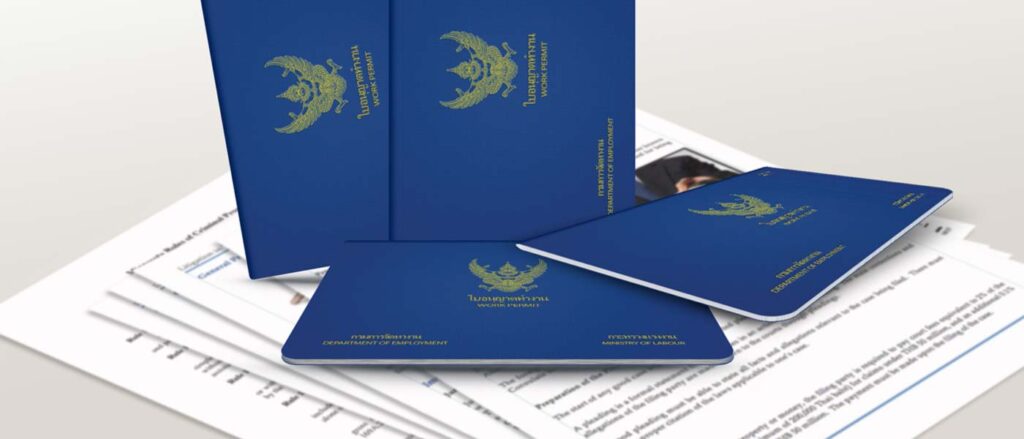
A work permit is issued by the Department of Employment under the Ministry of Labour. In most cases, the application must be supported by a Thai employer, and the process involves submitting extensive documentation.
Typically, the employing company must meet certain criteria, including employing a minimum number of Thai staff and maintaining a required level of registered capital per foreign employee.
The usual process begins with obtaining a Non-Immigrant “B” visa from a Thai embassy or through an e-visa system. Once you enter Thailand with this visa, your employer can proceed with the work permit application. Work permits are typically issued for limited periods, often six months to one year, and are tied to a specific job, employer, and location.
EXPIRY AND RE-ENTRY in Thailand
A work permit is linked to your visa status. If your visa expires, your work permit becomes invalid. It is therefore essential to monitor renewal dates carefully.
If you leave Thailand, you must obtain a re-entry permit in advance. Without it, your visa will be cancelled upon departure, requiring you to restart the entire process.
Re-entry permits can be obtained from immigration offices or at international airports but only as part of the departure passport check process.
Any change in job role, employer, or work location must be approved before it takes effect.
EMPLOYMENT WITHOUT PERMIT in Thailand
Working without a valid permit carries serious penalties, including fines, detention,
deportation, and possible blacklisting. While enforcement may vary, it is strongly recommended to ensure that all documentation is in order before starting any form of work.
JOB SEARCH in Thailand
Finding employment in Thailand depends largely on your skills and experience. Jobs are advertised through newspapers, recruitment agencies, and online platforms. As in other countries, specialised skills — particularly in areas such as IT, engineering, finance, and international business — improve your chances significantly.
Location also plays a role. Major centres such as Bangkok, Pattaya, Hua Hin, and Phuket offer the most opportunities but also the highest competition. Teaching remains a common entry point, but opportunities also exist in tourism, administration, sales, media, and specialised professions.
Positions advertised as “Thai National Only” cannot legally be filled by foreigners, as a work permit cannot be issued for these roles.

STARTING YOUR OWN BUSINESS in Thailand
Foreigners may establish a company in Thailand, but the process is regulated and can be complex. Certain business activities are restricted under the Foreign Business Act, and most documentation must be submitted in Thai. Professional legal and accounting advice is strongly recommended before proceeding.
In practice, most foreign entrepreneurs set up a Thai limited company. While foreigners can own shares, majority ownership is usually required to be Thai unless special permissions (such as BOI promotion) are obtained. This makes structuring the company correctly from the beginning extremely important.
If you intend to work in your own company and obtain a work permit, the company must meet the financial requirements. A commonly applied rule is that the company should have at least 2 million Baht in registered and paid-up capital per foreign work permit. This capital must be properly documented and paid into the company, although it can later be used for legitimate business expenses.
The basic steps in establishing a company include reserving a company name, preparing the memorandum of association, registering the company, depositing capital, and setting up corporate records. Once established, the company must register for tax, social security, and any required business licences depending on its activities.
It is essential to understand that using nominee or “strawman” shareholders simply to satisfy legal ownership requirements is not permitted under Thai law. While such arrangements have been used in the past, they carry significant legal risk if challenged. Authorities may investigate whether Thai shareholders are genuine investors or merely holding shares on behalf of a foreigner.
A more secure approach is to work with trusted partners or investors and structure the company transparently and in compliance with regulations. In all cases, independent legal advice should be obtained to ensure that the ownership structure, shareholder agreements, and voting rights are properly documented and enforceable.
One of the first practical steps after company registration is to open a corporate bank account. This account will be used for capital deposits, operating expenses, and ongoing business transactions. It is important to clearly define the founder as the person with the signing rights and control of the account in accordance with the company’s governance structure.
Running a company in Thailand also involves ongoing responsibilities, including accounting, tax filings, and compliance with labour laws. Engaging a qualified accountant and maintaining proper records from the beginning will help avoid problems later.
USING LEGAL SERVICES in Thailand
Legal assistance is often necessary when dealing with contracts, company formation, or regulatory compliance. An experienced lawyer can help ensure that documents are properly drafted and that procedures are followed correctly.
Ask in your social network and business connection which firms have good reputation among your friends.
It is advisable to seek recommendations from trusted sources, as reputable legal professionals can help you avoid costly mistakes and ensure compliance with Thai law.
About the Author